If you work in HVAC or manage a facility, the subject of MERV ratings comes up constantly. Yet for something so fundamental to air filtration decisions, there's still a lot of confusion around what the different MERV ratings for air filters are, and what the difference between one rating and the next looks like on the job.
This guide takes a closer look at these questions, looking at the key difference between MERV 8 and MERV 11 air filters - and how they compare to other solutions on the market.
What Are the Different MERV Ratings for Air Filters & What Do They Mean?
MERV stands for Minimum Efficiency Reporting Value. It's a standardized rating system that measures how effectively an air filter captures airborne particles across a defined size range. The scale runs from 1 to 20, with higher numbers indicating finer filtration capability.
The critical thing to understand is that a higher MERV rating also means greater resistance to airflow, known as pressure drop. An HVAC system designed around a MERV 8 filter may not perform efficiently with a MERV 13 installed without modification.
Remember Brookaire's advice: Filter selection is always a balance between filtration performance and system compatibility.
MERV 8: The Reliable Baseline
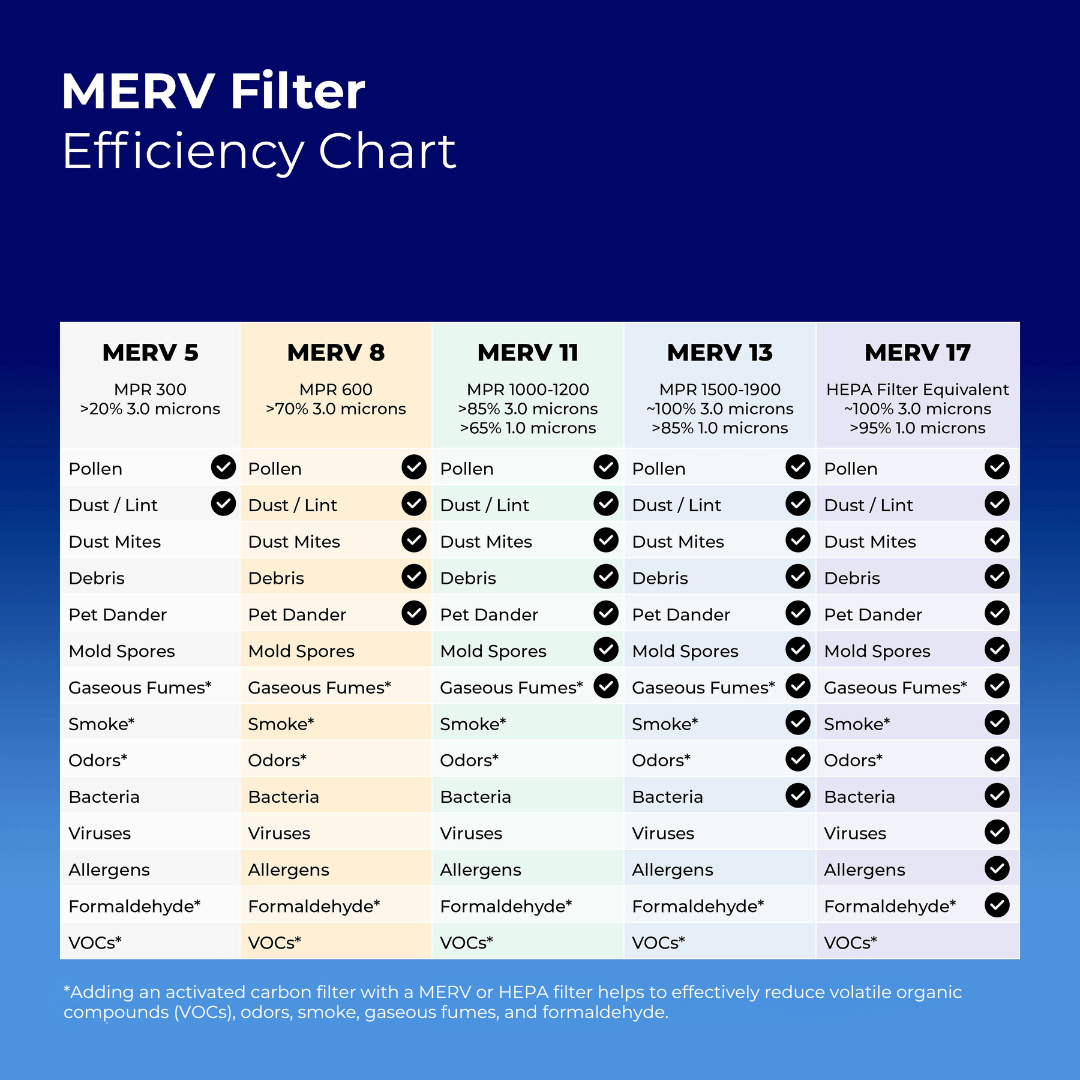
MERV 8 is the standard starting point for most commercial HVAC applications. It captures particles in the 3.0 to 10.0 micron range, covering dust, mold spores, pollen and lint. For general-purpose commercial buildings where the primary goal is equipment protection and basic air quality maintenance, MERV 8 does the job reliably without placing excessive strain on the system.
Should I Choose a MERV 8 or MERV 11 Filter?
The difference between MERV 8 and MERV 11 air filters comes down to how much particulate capture your building actually demands. MERV 11 captures particles down to 1 micron, adding finer dust, pet dander and certain respiratory irritants to what the filter can handle.
For schools, offices and light commercial environments where occupant comfort and air cleanliness matter, MERV 11 is often the more practical choice. It delivers a meaningful improvement in filtration without the system compatibility concerns that come with higher ratings.
Is MERV 13 Worth the Upgrade from MERV 11?
For many facilities, yes. MERV 13 filters capture particles as small as 0.3 micron, which includes bacteria-carrying particles, fine smoke, microscopic allergens and atmospheric dust that a MERV 11 filter would allow through. That step up in performance is meaningful in environments where air quality directly affects the health, safety, or productivity of the people inside.
Healthcare facilities, pharmaceutical manufacturing environments and commercial buildings with high occupancy or stricter air quality expectations are where MERV 13 consistently earns its place. It's also a strong choice for buildings where MERV 11 has been in use, but occupants are experiencing persistent air quality complaints, or where a facility manager wants stronger protection without moving into HEPA territory.
System readiness remains an important consideration. MERV 13 generates a higher pressure drop than MERV 11, and not every HVAC system handles that without some impact on performance. Before making the switch, it is worth confirming that your equipment can support the added resistance.
Brookaire's MERV 13 pleated air filter is engineered to deliver that higher level of filtration while maintaining reliable airflow in compatible systems.
Choosing the Right Air Filter for Your System
The highest MERV rating isn't always the right one. The right air filter is the one that matches your air quality goals, works within your system's design parameters, and performs reliably over its service life. For most commercial buildings, the conversation sits between MERV 8 and MERV 13. For critical environments, it goes further.
Brookaire: A Breath of Fresh Air
At Brookaire, we carry a full range of MERV-rated filters and work with contractors and facilities managers across the Northeast to specify the right solution for every application. If you need guidance on filter selection for your building or project, our team is ready to help. Browse our full range of air filters or get in touch with us directly.